Posts

Showing posts with the label hospitals in gurgaon

Diaphragmatic Hernia – Is It Always Congenital?
Image
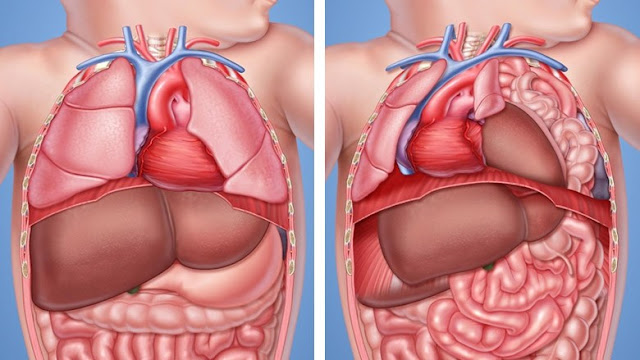
Overview A diaphragmatic hernia occurs when any one or more of abdominal organs move upwards into the chest through an opening in the diaphragm. This opening is actually a defect which is either since birth (congenital) or develops in the course of life (acquired). Thus, diaphragmatic hernia has two types, namely; Congenital Diaphragmatic Hernia (CDH) and Acquired Diaphragmatic Hernia (ADH). The differences between the two will be highlighted below. Differences in the Types CDH occurs due to the abnormal development of a foetus in the womb. This abnormal development results in a defect which allows one or more organs to move up and occupy some space in the chest, where lungs should be. This usually affects one lung which doesn’t develop properly.  ADH usually results from an injury, either a blunt one or a penetrating one. Accidents and falls are usually to blame for these, and an error made during abdominal or chest surgery can also cause AD...

Partial Knee Joint Replacement Surgery – What’s the Outlook?

Image
Overview Partial knee joint replacement surgery , or simply partial knee replacement, is a surgery like total knee replacement , but to replace only one part of the damaged knee. It is usually done to replace either the inside (medial) part, the outside (lateral) part, or the kneecap of the knee.The most common reason people have a knee joint replaced is to ease severe arthritis pain. Read also:   How to Reduce the Risks of a Knee Replacement Surgery? What’s the Outlook? The usual prognosis is that most people are able to recover quickly and have much less pain than they did before surgery. People who have a partial knee replacement recover faster than those who have a total knee replacement. Many people are able to walk without a cane or walker within 3 to 4 weeks after surgery, but usually need physical therapy for 4 to 6 months. Most forms of exercise are also okay after surgery, including walking, swimming, tennis, golf, and biking. However, hi...

What Is Deep Brain Stimulation, Why Is It Done and Who Should Get It?

Deep brain stimulation is a procedure used in neurosurgery that involves implanting electrodes in certain areas of the brain. These electrodes produce electrical impulses that regulate normal impulses. The electrical impulses may also be used to affect certain cells and chemicals within the brain. In the procedure, a pacemaker-like device is the placed under the skin of the upper chest which controls the amount of stimulation. Deep brain stimulation is used to treat a number of neurological conditions such as: ·          Essential tremor ·          Parkinson's disease ·          Dystonia ·          Epilepsy ·          Tourette syndrome ·          Chronic pain ·          Obsessive compulsive di...